Can You Touch the Snow Monkeys? The Park Rules
No touching, no feeding, no staring, no selfie sticks, drones or pets. Jigokudani's own rules, why they exist, and what to do if a young monkey walks up to you.
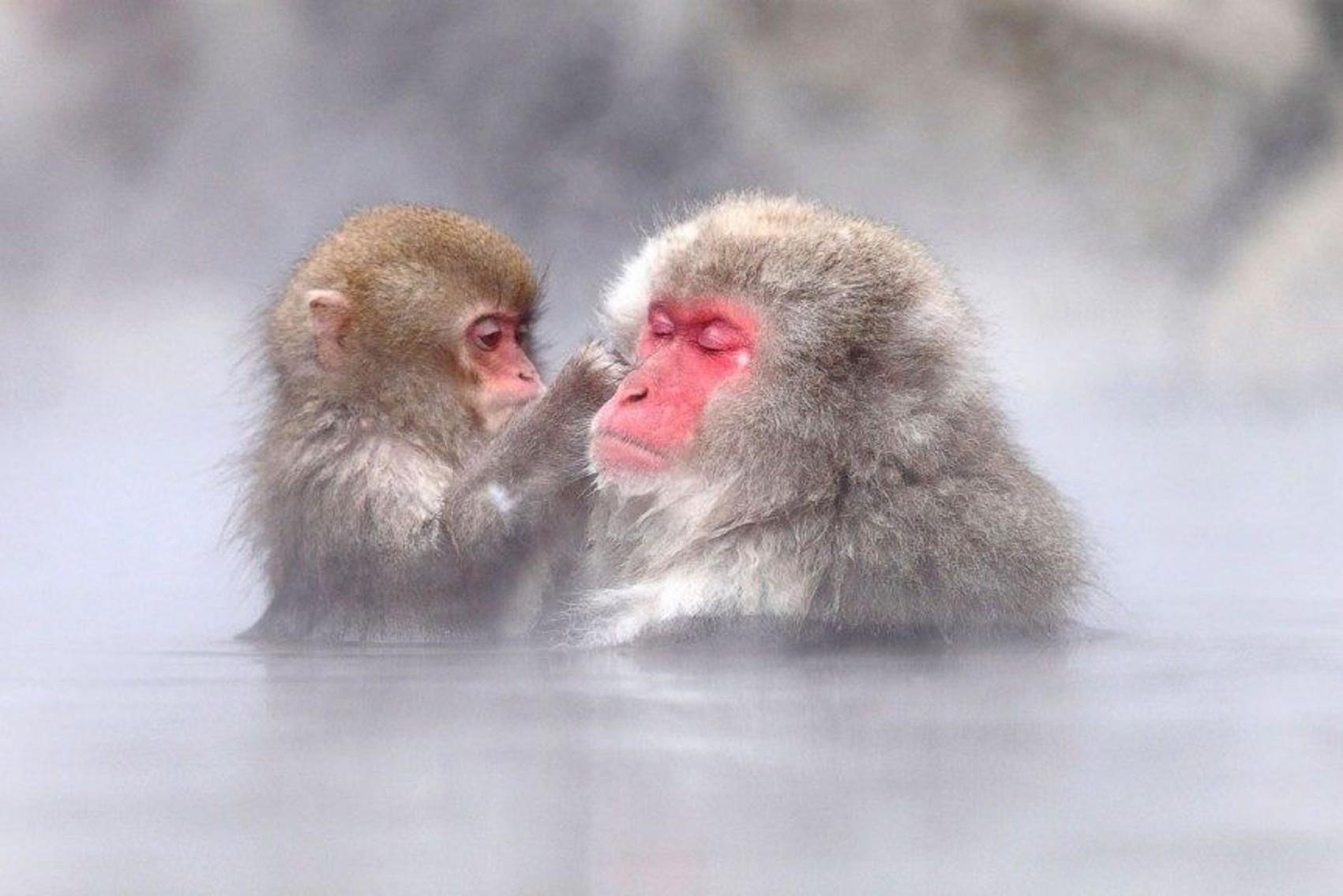
No. You cannot touch the snow monkeys, and the park is strict about it. They are wild Japanese macaques that come down from the mountains each day, and the closeness that makes Jigokudani special depends on everyone keeping to a few rules.
The rules, in the park’s words
The park’s caution page lists them plainly:
- No feeding. “Do not show or give them any food.” Feeding is “strictly prohibited.”
- No touching, no shouting. “Do not touch or yell to monkeys. Do not make monkeys nervous.”
- No staring. “Staring and opening one’s mouth to them mean hostile.” A smile with teeth reads as a threat to a macaque.
- Step away from curious babies. “Some curious baby monkeys can come close to you; in that case please step away from them.”
- Cameras are fine, with limits. Ordinary cameras and phones, flash included, are allowed. Selfie sticks, drones and putting a camera into the bath are banned.
- No pets of any kind, including guide and assistance dogs.
Why they matter
The monkeys tolerate people at arm’s length because generations of them have learned that visitors at Jigokudani do nothing: no food, no grabbing, no threats. One person feeding a monkey teaches it to approach people for food, and the next visitor pays for it. The ban on selfie sticks and drones exists for the same reason; both push into the monkeys’ space in a way a person standing at the rail does not.
Practical habits that keep you out of trouble
- Keep food out of sight, and do not eat on the trail near the park.
- Close your bag and keep phones on a strap or in a pocket at the pool.
- Look at the monkeys, not into their eyes. Photograph from the side.
- Give the pool edge room. The best photos come from the railings anyway.
- Children: hold hands at the pool, and explain the no-staring rule before you arrive.
Is it ethical?
The monkeys are not caged or tethered and leave for the mountains when they choose. Staff feed the troop, mostly barley, and that routine is what brings them to the valley each day. The park opened in 1964 partly to give the monkeys somewhere to be other than farms and roads. Visitors never feed them. If regular feeding by staff troubles you, it is worth knowing before you go; the park’s position is that it influences the monkeys as little as it can while letting people watch them up close.
For when the monkeys are actually in the water, see the month-by-month guide; for the walk in and what to wear, the walk page.
Questions people ask
Can you touch the snow monkeys in Japan?
No. The park’s rules say not to touch the monkeys or shout at them, and warn that a nervous monkey may threaten or bite. They are wild Japanese macaques that have learned people at Jigokudani are neither food nor danger, which is why they let you stand so close. Touching breaks that, for you and for the next visitor.
Are the snow monkeys in Japan aggressive?
Not if you follow the rules. They ignore visitors who keep their distance, do not stare and carry no visible food. Trouble starts with food: the park bans showing or giving them anything to eat, because monkeys that learn people carry food start to grab. Keep snacks zipped away and eat nothing on the trail near the park.
Can you swim with the snow monkeys in Japan?
No. The pool at the park is the monkeys’ own, and putting even a camera into it is banned. If you want a hot spring yourself, Korakukan, the old inn just below the park, has baths for guests, and the onsen towns of Shibu and Yudanaka, on the way back to the station, have many more.
What to do if a monkey jumps on you?
Stay calm, do not grab it and do not look it in the eye; it will usually get down on its own. The park’s advice for the common case, a curious young monkey walking up to you, is simply to step away. Never pull a bag back from a monkey that has hold of it: let go and tell a member of staff.
Is Jigokudani Monkey Park ethical?
The monkeys are wild and free to come and go; there are no cages or fences. Staff do feed them, mostly barley, which is what brings the troop down from the mountains each day, and the park was set up in 1964 partly to keep monkeys away from farms and roads. Visitors are never allowed to feed them. Whether regular feeding sits right with you is a fair question; the park’s case is that it influences the monkeys as little as it can.
Book the Day Trip
The top-rated Snow Monkey day trip — 4.9/5 from 978 reviews, from $138 (Oct 2026) with park admission, transport and Zenko-ji included. Free cancellation to 24 hours; winter dates sell out first.
Check Availability